888-984-3813

But as highlighted in a session at PestSure’s 2025 Safety and Loss Prevention Conference, many of the biggest exposures come from everyday decisions that don’t always feel like safety risks in the moment.
And often, those decisions are tied directly to time pressure.
When technicians and managers are trying to move faster, fit more into the day, or solve problems on the fly, they can unintentionally create risks that impact insurance coverage, claims outcomes and long-term costs.
As Abby Thalachelloor, PestSure’s director of claims, shared with attendees that every decision can have unforeseen consequences.
The Hidden Side of Risk
Not all exposures come from accidents. Many come from business practices that seem routine:
These aren’t isolated issues. They are operational decisions that, over time, can lead to costly claims.
Thalachelloor told attendees that companies are often paying for things we shouldn’t have to not because of bad intent, but because of gaps
Full routes, customer expectations, seasonal surges, and travel between stops can create pressure to move faster and fit more into the day. But when time management slips, safety is often the first thing to go with it.
At PestSure, we see it time and again; rushed technicians are more likely to take shortcuts, skip steps, or overlook hazards. The result isn’t just reduced service quality. It’s increased risk for accidents, injuries, and costly claims.
The good news is that better time management doesn’t just improve productivity. It directly strengthens safety performance in the field.
Why Time Pressure Creates Risk
When technicians feel behind schedule, small decisions start to add up:
These aren’t intentional safety violations. They’re reactions to time pressure. And they’re exactly where many workplace injuries and auto claims begin.
Creating safer outcomes starts with giving technicians the tools and structure to manage their time effectively.
Start the Day with a Plan
A safe day begins before the first stop. Encourage technicians to review their
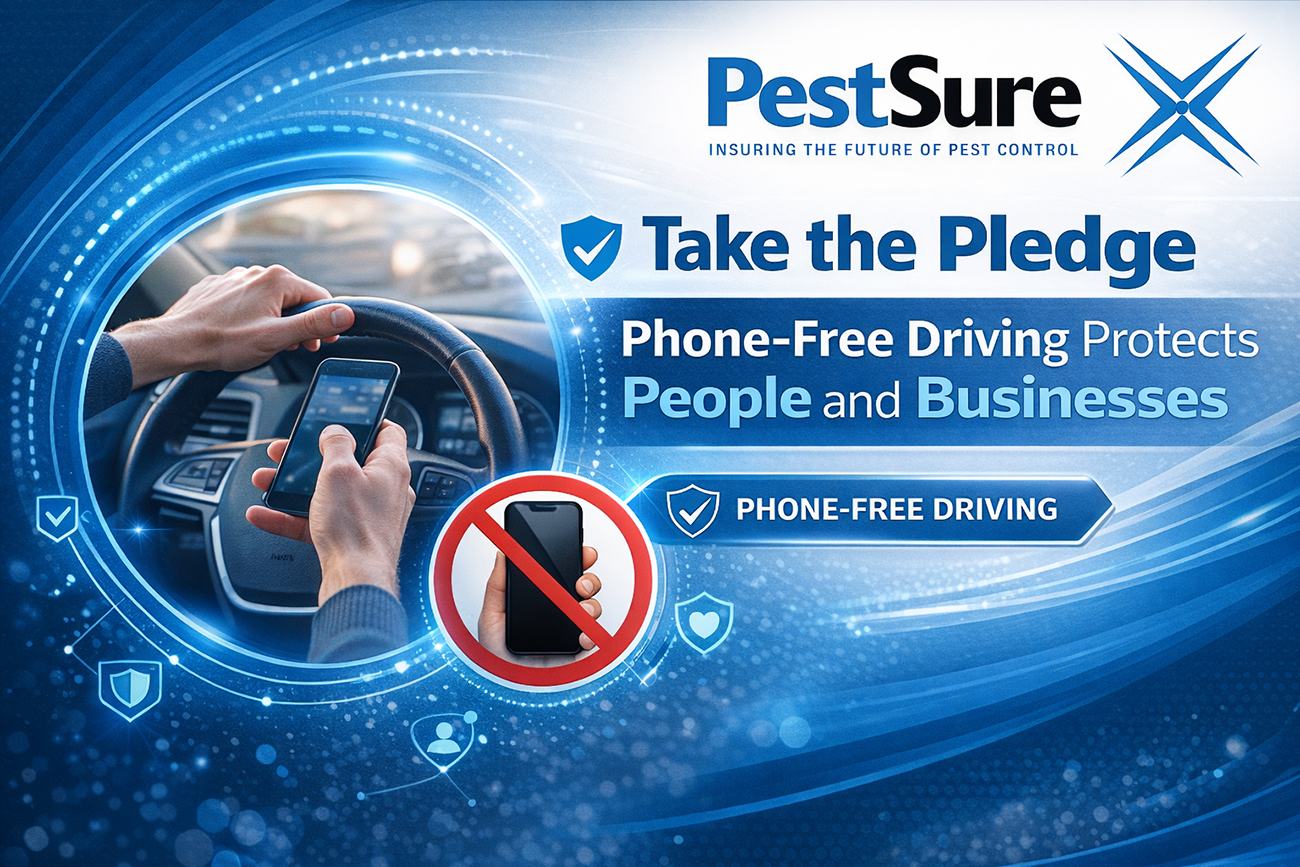
In the pest control industry, your fleet is always in motion. Technicians are navigating neighborhoods, responding to customer needs, and managing tight schedules all while operating a vehicle. That reality makes distracted driving, particularly cell phone use, one of the most significant and preventable risks facing your business.
At PestSure, we view safe driving not as a policy issue, but as a cultural commitment. Encouraging employees to take the pledge to drive phone-free is one of the most effective steps a company can take to reduce risk, protect employees, and strengthen long-term performance.
The Risk Is Real and Preventable
Distracted driving continues to be a leading cause of vehicle accidents, and mobile device use is at the center of that risk. In an industry where thousands of technicians are on the road every day, even a momentary lapse in attention can result in costly accidents, injuries, and liability exposure.
The good news is that this risk is controllable. As PestSure’s loss prevention philosophy emphasizes, prevention - not reaction - is what drives meaningful results.
Case Study Insights: What Works in the Field
Across the PestSure membership, leading companies are proving that a no cell phone policy is not only achievable,
Labor shortages continue to challenge pest control companies across the country. To keep routes covered, many businesses are expanding their hiring pool and bringing on first-time or less experienced drivers. While this approach can solve short-term staffing needs, it often introduces a different kind of risk - one that shows up quickly in claims, costs, and operational challenges.
As outlined in our February 2026 blog, The True Cost of Hiring Inexperienced Drivers, the early months behind the wheel are the most dangerous for new drivers . The good news is that many of these risks can be reduced before a new hire ever starts their first route by making smarter, experience-focused hiring decisions.
Experience Is a Risk Control, Not Just a Resume Line
When evaluating candidates, it is easy to prioritize availability, attitude, and willingness to work. While those traits matter, driving experience is one of the most important and often overlooked risk controls a company can use.
Research consistently shows that experience, not age, is the stronger predictor of crash risk. Drivers who have spent more time behind the wheel develop critical skills that cannot be replicated in a short onboarding period, including:
Most of them are preventable.
Workplace Eye Wellness Month serves as an important reminder that vision protection is not optional PPE - it is essential risk control. For pest control technicians, eye hazards are part of the daily environment. Whether working in crawl spaces, attics, exterior perimeters or commercial facilities, flying debris, pesticide splashes, dust and protruding objects create constant exposure risks.
The Data Tells the Story
According to the Bureau of Labor Statistics (BLS), nearly three out of every five workers who suffered eye injuries were not wearing eye protection at the time of the accident.
Even more concerning, many who were injured were wearing the wrong type of protection - typically standard eyeglasses without side shields.
In pest control operations, that gap between “having eyewear” and “wearing the correct protection” can result in serious, and sometimes irreversible, injury.
Common Eye Injury Risks for Pest Control Technicians
Technicians routinely encounter multiple eye hazards during service calls, including: